

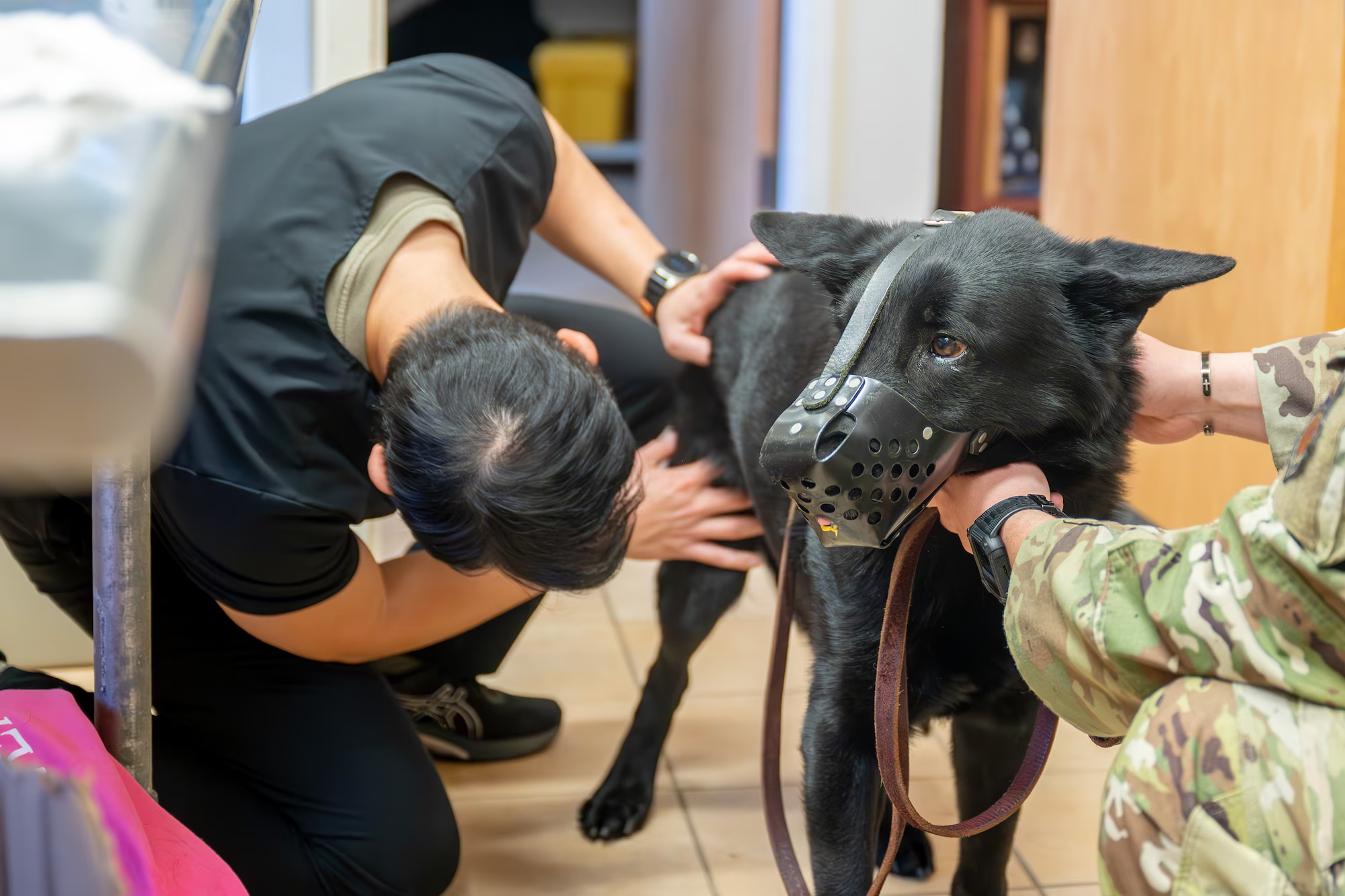
You know your dog’s normal stride, their drive, the way they launch into a jump or turn on a dime. That is why even a small change can sit in your chest all day. Maybe your hunting dog seems stiff after a weekend in the field. Maybe your agility dog knocks a bar they never touch. Maybe your service dog is still willing, still focused, but slower to rise and harder to settle after work. You are not overreacting. With active dogs, small problems often show up before there is a dramatic injury. If you are looking for veterinary in Rock Hill, SC, paying attention early can make all the difference.
The short version is simple. A general veterinarian does far more than treat emergencies. They help prevent strain, catch early signs of pain, guide safe conditioning, and decide when your dog needs advanced sports medicine care. For many families, that steady, practical support is what keeps a dog working, competing, and feeling good for longer.
General veterinarian care protects performance before a major injury happens
People often think of sports medicine only after a torn ligament, a hard fall, or a dog that suddenly comes up lame. Most active and working dogs decline in quieter ways first. Muscle soreness gets mistaken for age. Mild toe dragging gets blamed on fatigue. A dog starts refusing one side of a weave entry, hesitates at the truck, or takes longer to warm up. Those signs matter.
A general veterinarian looks at the whole picture. They ask about workload, surfaces, weather, recovery time, body condition, nail length, diet, and behavior changes at home. That matters because performance problems are not always about one injured body part. A dog with low-grade back pain may start loading one shoulder more heavily. A dog carrying extra weight may seem fit enough to work, but repeated stress on joints and soft tissue adds up fast.
This is where general veterinary support for active dogs becomes practical, not abstract. Regular exams create a baseline. Your veterinarian learns what is normal for your dog’s gait, muscle tone, range of motion, and recovery pattern. When something changes, they have context. That makes early intervention more likely, and early intervention is usually less expensive and less disruptive than waiting until your dog is clearly injured.
Working and sporting dogs face wear that companion dogs may never see
An active pet that hikes on weekends has different demands than a police K9, herding dog, dock diver, field trial retriever, or service dog on daily duty. Repetition changes risk. So does intensity. Hard turns, jumping, rough terrain, cold starts, slick floors, and long transport days all ask a lot from a dog’s body.
You may also be managing pressure that goes beyond affection. If your dog works, their health affects your schedule, your safety, and sometimes your income. If your dog competes, there may be entry fees, travel costs, and months of training tied to one event. When something feels off, it is easy to hope it passes in a day or two. That delay is common. It also lets minor strain become a bigger problem.
A general veterinarian helps you sort out what can be monitored, what needs rest, and what should be worked up now. They can screen for arthritis, soft tissue strain, paw injuries, nail trauma, spinal pain, ear issues that affect balance, dental pain that changes grip work, and medical conditions like dehydration, endocrine disease, or heart concerns that can reduce stamina. Good care is not just about injury treatment. It is also about deciding whether your dog is fit to keep doing the job asked of them.
When a case needs deeper evaluation, your veterinarian can refer you to a specialty program such as canine sports medicine and physical rehabilitation at Ohio State, canine sports medicine at the University of Minnesota, or sports medicine and rehabilitation at Cornell. That referral path is part of good primary care, not a failure of it.
Early assessment lowers the cost and stress of canine sports and working dog care
Waiting has a price. A dog that keeps working through soreness may compensate until another area breaks down. A mild iliopsoas strain can become weeks or months of restricted activity. A dog with subtle cruciate disease may still perform until one hard landing turns a manageable issue into surgery and rehab.
Working dog veterinary care often comes down to timing. The earlier you identify the pattern, the more options you usually have. That might mean temporary workload changes, anti-inflammatory treatment, rehab exercises, weight adjustment, boot protection, or better warm-up and cool-down routines. It may also mean finding out your dog should not return to full duty yet, which is hard to hear but easier than dealing with a preventable setback.
| Approach | What it looks like | Short-term result | Long-term risk or benefit |
| Wait and watch | Keep training or working unless the limp becomes obvious | Less disruption this week | Higher risk of compensation injuries, longer recovery, higher cost |
| General veterinarian exam | Physical exam, gait review, pain check, plan for rest or diagnostics | Clearer next step and earlier pain control | Better chance of catching small problems before they escalate |
| Veterinary referral for sports medicine | Advanced imaging, rehab plan, conditioning guidance | More precise diagnosis for complex cases | Stronger return to function when standard care is not enough |
Practical steps support active dogs between visits
Track the small changes. Write down stiffness, reluctance to jump, slower sits, dropped retrieves, changes in turning, paw licking, or longer recovery after work. Video your dog walking, trotting, and performing one or two routine tasks. Patterns are easier to see over time than in memory.
Adjust workload early. Rest does not always mean crate confinement, and exercise does not always mean business as usual. Cut intensity before your dog forces the decision. Shorter sessions, better footing, and structured warm-ups can prevent a minor issue from becoming a real injury.
Use your general veterinarian as your first checkpoint. Book an exam when your dog is not moving normally, seems less willing, or loses performance for more than a brief period. Ask about body condition, joint health, pain control, recovery, and whether your dog needs imaging or rehab. This is where a solid general veterinarian becomes the anchor for the rest of your dog’s care.
Steady veterinary support helps dogs stay active longer
Active and working dogs give a lot, often without showing pain in obvious ways. You do not need to wait for a crisis to take a change seriously. A general veterinarian can help you protect your dog’s comfort, performance, and long-term soundness with earlier exams, practical advice, and referral support when needed.
If your dog seems different, trust what you are seeing and schedule a veterinary visit. That one step can save time, money, and a lot of unnecessary strain for both of you.
