

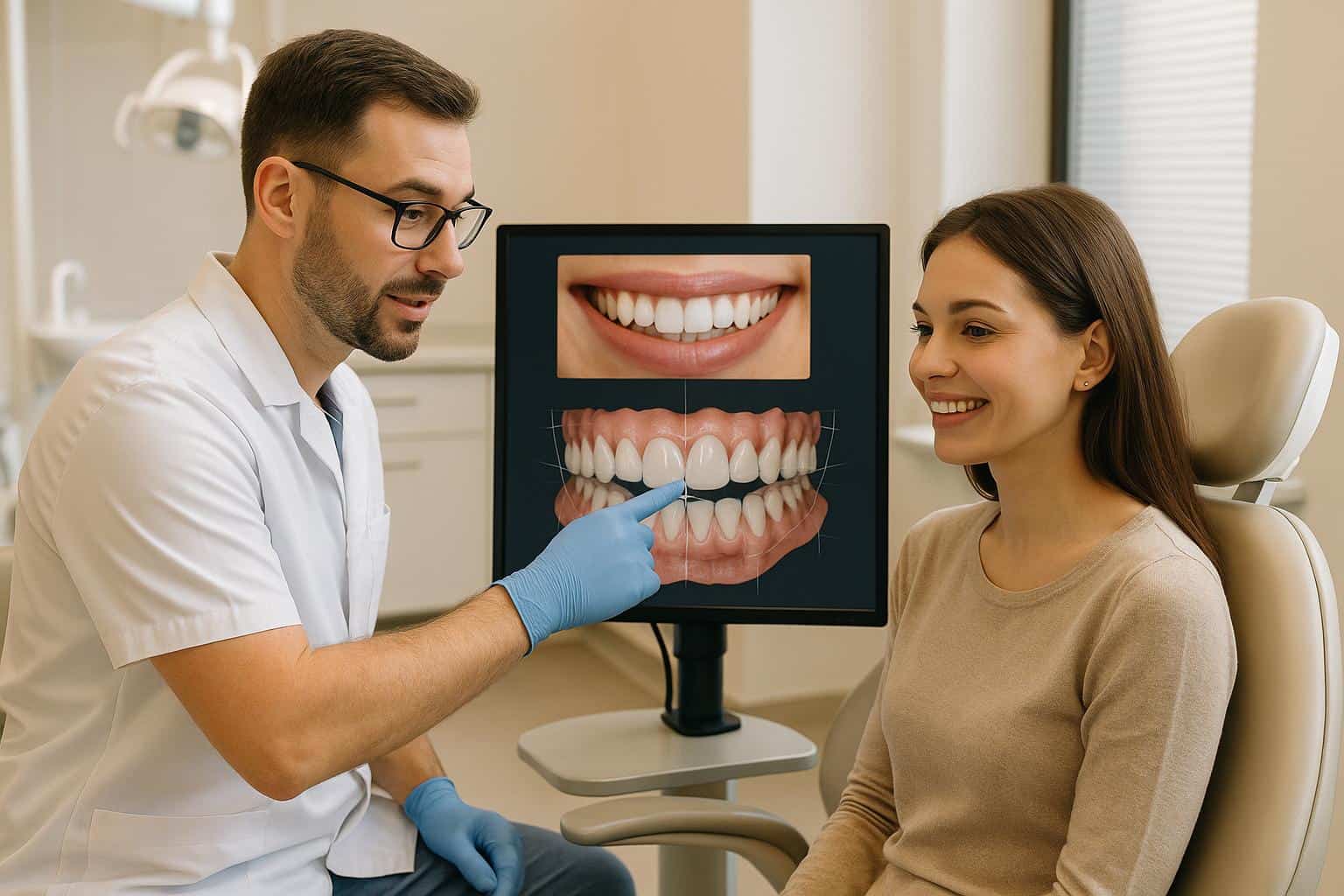
You might be feeling stuck between what you hope your smile could look like and what you fear might actually happen in the chair. Maybe you have seen stunning “before and after” photos online, but they feel a bit unreal. Maybe a Quogue, NY dentist has described veneers, aligners, or crowns, yet you still cannot picture how any of it would look on your own face. That gap between explanation and understanding can create a lot of quiet anxiety.end
Because of this tension, you might hesitate to move forward. You worry about cost. You worry about regretting a change you cannot undo. You worry that you will nod during the appointment, then go home and realize you did not really understand what was being proposed. You are not alone. Many people feel that same mix of hope and uncertainty when they start thinking about changing their smile.
This is where digital smile planning can change the experience. In simple terms, it uses photos, scans, and software to design your future smile on a screen, then uses that design to guide treatment and to educate you step by step. You can see a realistic preview, understand what each option involves, and have a calmer, more informed say in your own care.
So, where does that leave you? The short version is this. Digital smile planning makes dental treatment easier to understand, more transparent, and more collaborative. It turns confusing dental language into pictures you can react to, ask questions about, and trust.
Why is changing your smile so stressful in the first place?
Think about how personal your smile is. It shows up in every photo, every laugh, every first impression. When someone suggests changing it, even for the better, it can feel like they are suggesting a change to who you are. That alone is emotional.
Then there is the information gap. A dentist might talk about tooth proportions, gum lines, bite alignment, or occlusion. You hear a lot of detail, but you still cannot see it in your mind. Because of this, you might say yes to treatment while still feeling unsure. Or you might say no, not because it is the wrong plan, but because you do not feel safe enough to proceed.
Research has shown that visual tools and digital planning can improve communication and accuracy in cosmetic and restorative dentistry. For example, studies on digital smile design and computer guided planning suggest that these tools help align patient expectations with realistic outcomes and can improve precision in procedures like implant placement and restorative work. You can see some of this work in clinical discussions on digital smile design and esthetic planning, as well as in reviews of computer assisted planning for implants and restorations.
So the problem is not just your teeth. It is the uncertainty. You are being asked to make a big decision without a clear picture. That is where agitation builds. You might delay treatment, live with a smile that bothers you, or bounce from one opinion to another without feeling settled.
How does digital smile planning actually help you understand your options?
Digital smile planning, sometimes called digital smile design for patient communication, starts with simple inputs. Your dentist takes high quality photos of your face and teeth. Often, they will also take digital scans instead of traditional molds. These are comfortable and quick. Software then uses these images and scans to build a virtual model of your mouth.
From there, your dentist can adjust tooth shape, length, and position on the screen. They can simulate whitening, contouring, veneers, or orthodontic changes. You see your own face with different versions of your smile. This is not a random “filter.” It is based on real dental measurements and principles of facial harmony that have been studied and refined over many years. Some of those principles go back to classic work on esthetics and function, such as the ideas discussed in older but still referenced research on occlusion and restorative planning.
Why does this matter so much for education? Because when you can see it, you can ask better questions. Instead of “What are veneers again?” you can ask “Why are you making these two teeth slightly longer?” or “Can we make the change more subtle?” You move from feeling like a passive patient to feeling like a partner in the design.
It also helps with honesty. A dentist can show you what is realistic, what might be too extreme, and what trade offs come with each choice. For example, a very white, uniform smile might look artificial on your face. A more natural shade might fit your skin tone better. With digital smile planning in patient education, you see those differences before anyone touches a tooth.
What are the real-world pros and cons compared to the old way?
To make this more concrete, it helps to compare a traditional planning approach with a digitally guided one. Both can lead to good results. The big difference is in how clearly you can see and understand what is happening before treatment begins.
| ASPECT | TRADITIONAL SMILE PLANNING | DIGITAL SMILE PLANNING |
| How your future smile is shown | Verbal explanation, sketches, maybe sample photos of other patients | Photo realistic simulation of your own smile on a screen |
| Your role in decisions | Mostly listening and trusting the dentist’s description | Active feedback while viewing different design options |
| Understanding of treatment steps | Can feel abstract, especially if many teeth are involved | Visual breakdown of which teeth change and how |
| Expectation vs reality | Higher risk of mismatch between what you imagined and final result | Closer alignment between preview and outcome when treatment follows the plan |
| Emotional comfort | More room for doubt, fear of the unknown | More clarity, which often lowers anxiety and builds trust |
| Time and cost | Less planning time up front, but possible adjustments later | More planning time at the start, often fewer surprises or reworks |
So, where does this leave you as a patient considering cosmetic or restorative work with a general dentist? It means you can ask for a planning process that helps you see the road ahead, not just hear about it.
Three practical steps to use digital smile planning to your advantage
- Ask your dentist directly about digital smile design tools
You do not need special language. You can simply say, “Do you use any kind of digital smile planning or photo simulations to show what my smile could look like?” This opens the door to a more visual conversation. If they do use these tools, ask to see examples of how they present options to patients. If they do not, you can still ask for photos, mock ups, or wax models so you can understand the plan more clearly.
- Bring your own questions and preferences to the planning session
Before your appointment, write down what bothers you most about your smile. Is it color, shape, spacing, or how your teeth look when you talk? During the digital planning session, use that list. For example, you might say, “Can you show me a version with less change to the front teeth?” or “I want it to look natural, not perfect. Can we plan for that?” This makes the smile design process personal and grounded in your values, not just in what is technically possible.
- Take your time reviewing the proposed smile and ask for clarity on every step
When you see the digital preview, do not rush. Ask your dentist to explain what each change means for your teeth. How much enamel will be removed, if any. Whether treatment is reversible. How long it will last. If they mention things like bite adjustment or occlusion, ask them to show you on the screen where that matters. A good general dentist will welcome these questions and use the digital tools to answer them visually, not just verbally.
Finding confidence in your decision about smile treatment
You may have lived with a smile that does not feel like “you” for a long time. Or you might be facing needed dental work and worrying how it will change your appearance. That worry is understandable. You are trying to protect both your health and your identity.
Digital smile planning does not remove every risk or guarantee perfection. What it offers is something more human. It gives you a clearer picture, a shared language with your dentist, and a way to make decisions that feel informed instead of pressured. It turns a confusing process into a conversation you can see, respond to, and trust.
If you are considering cosmetic or restorative care with a general dentist, you deserve to feel heard, informed, and involved. Ask about digital planning tools. Ask to see your options. Give yourself permission to ask every question you need until your next step feels steady and your future smile feels like one you can truly own.
