


Confusing riddles are fun yet tricky puzzles that make you think outside the box. These brain-teasers challenge logic, perception, and reasoning skills. They often lead to surprising solutions that force you to reconsider your first instinct.
People enjoy them because they create humorous moments when someone struggles with an obvious answer. Whether found in books, movies, or shared among friends, these riddles keep the mind engaged.
From ancient civilizations to modern-day puzzles, riddles have fascinated people for centuries. They help sharpen problem-solving skills while also offering entertainment. Many classic riddles use wordplay, hidden meanings, and misdirection to confuse the solver. The more you try to figure them out, the trickier they seem. But once you get the answer, the “aha!” moment is always satisfying.
What Makes a Riddle Confusing?

A riddle becomes confusing when it manipulates words, plays with logic, or defies expectations. Some riddles have double meanings, while others require a shift in perception to uncover the answer. This unpredictability makes them fun and challenging for all ages.
The way a question is phrased can mislead the solver, causing them to overlook the simple solution. Some riddles use puns or homophones, while others demand critical thinking.
The best ones leave you questioning your own logic before realizing the clever trick behind them. A confusing riddle isn’t just about being hard; it’s about forcing you to look at a problem differently. This challenge is what makes them so engaging.
History of Confusing Riddles
Riddles have been part of human culture for thousands of years, appearing in ancient texts, folklore, and mythology. In Greek mythology, the Sphinx challenged travelers with its famous riddle, while Norse legends contained mind-bending puzzles.
Medieval literature also featured riddles as a way to test intelligence and wit. Over time, riddles evolved into various forms, from rhyming puzzles to complex logic challenges.
Today, they are commonly used in books, movies, and games as a way to engage audiences. Riddles remain popular because they stimulate the brain and encourage creative thinking. Whether they are tricky or humorous, they have remained a source of entertainment for generations.
Types of Confusing Riddles
- Wordplay Riddles – These use puns, homophones, or double meanings to confuse the solver.
- Logic Riddles – Require deductive reasoning and critical thinking to solve.
- Trick Questions – Appear simple but have a hidden twist that leads to an unexpected answer.
- Mathematical Riddles – Involve numbers and equations that play with logic.
- Lateral Thinking Riddles – Demand an unconventional approach to find the solution.
Each type has its own unique way of challenging the mind, making riddles enjoyable for different kinds of thinkers.
Examples of Classic Confusing Riddles
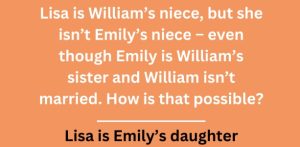
Here are some classic confusing riddles:
- “What has keys but can’t open locks?” (Answer: A piano)
- “The more you take, the more you leave behind. What is it?” (Answer: Footsteps)
- “I have cities, but no houses. I have mountains, but no trees. I have water, but no fish. What am I?” (Answer: A map)
These riddles trick the brain by using misleading clues, forcing you to reinterpret their meaning.
30 confusing riddles to challenge your brain!
- What has to be broken before you can use it? – An egg.
- I’m tall when I’m young and short when I’m old. What am I? – A candle.
- The more of me you take, the more you leave behind. What am I? – Footsteps.
- What has keys but can’t open locks? – A piano.
- What has hands but can’t clap? – A clock.
- What comes once in a minute, twice in a moment, but never in a thousand years? – The letter “M.”
- What has an eye but cannot see? – A needle.
- What has many rings but no fingers? – A telephone.
- What can travel around the world while staying in the same place? – A stamp.
- What can fill a room but takes up no space? – Light.
- What runs but never walks, has a bed but never sleeps? – A river.
- I have branches, but no fruit, trunk, or leaves. What am I? – A bank.
- The more you take, the more you leave behind. What am I? – Footsteps.
- What has a neck but no head? – A bottle.
- What gets wetter the more it dries? – A towel.
- I have cities but no houses, forests but no trees, and rivers but no water. What am I? – A map.
- What has one eye but can’t see? – A needle.
- What has ears but can’t hear? – Corn.
- What can you hold without touching it? – A conversation.
- What can you keep after giving it to someone? – Your word.
- I have legs but never walk. What am I? – A table.
- What gets bigger the more you take away? – A hole.
- What has four fingers and a thumb but isn’t alive? – A glove.
- What has a head and a tail but no body? – A coin.
- What has teeth but cannot eat? – A comb.
- What is so fragile that saying its name breaks it? – Silence.
- What is always in front of you but can’t be seen? – The future.
- I shave every day, but my beard stays the same. What am I? – A barber.
- The more you remove from me, the bigger I get. What am I? – A hole.
- What begins with an “E,” ends with an “E,” but only contains one letter? – An envelope.
How to Solve a Confusing Riddle
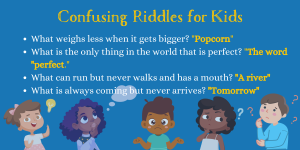
To successfully solve confusing riddles, you need to:
- Break down the question into smaller parts.
- Look for hidden meanings in the words.
- Think outside the box and consider different perspectives.
- Avoid overcomplicating the solution.
By following these steps, you can improve your ability to decipher tricky riddles quickly.
The Fun of Confusing Riddles
People enjoy confusing riddles because they challenge the brain, encourage laughter, and create fun moments. They’re great for social gatherings, brain-training games, and online challenges.
The best part is that they make you rethink the obvious and laugh at how easily you were fooled. Whether you solve them instantly or struggle for minutes, the fun is in the mental battle.
Famous Confusing Riddles in Pop Culture
Riddles have appeared in movies, books, and TV shows, often serving as clever challenges for characters. Some examples include:
- The Riddler’s puzzles in Batman – Famous for his tricky wordplay and logic traps.
- Harry Potter’s sphinx riddle – A test of wit and intelligence in the wizarding world.
- Alice in Wonderland’s nonsense riddles – Meant to confuse rather than make sense.
These pop culture references prove how riddles continue to be a beloved element in storytelling.
Confusing Riddles for Kids vs. Adults
Kids’ riddles are usually simpler and more playful, while adult riddles require complex reasoning and deep thought. However, both can be equally tricky in different ways. A child’s riddle might use basic wordplay, while an adult riddle could demand abstract thinking. Regardless of age, riddles are a fun way to test one’s mental sharpness.
The Psychology Behind Confusing Riddles
Riddles engage the brain by activating problem-solving abilities and critical thinking skills. They train the mind to approach challenges differently, encouraging lateral thinking. This makes riddles not just entertaining but also beneficial for cognitive development.
Why Do People Love Confusing Riddles?
People enjoy riddles because they:
- Provide a mental challenge that keeps the brain active.
- Offer a sense of accomplishment when solved.
- Are fun to share with friends and family.
Their ability to create curiosity and excitement makes them a timeless form of entertainment.
Tricky Riddles That Leave You Stumped
Here are some incredibly tricky riddles:
- “I speak without a mouth and hear without ears. I have no body, but I come alive with the wind. What am I?” (Answer: An echo)
- “What comes once in a minute, twice in a moment, but never in a thousand years?” (Answer: The letter ‘M’)
These riddles seem impossible at first, but their answers are cleverly hidden in the wording.
Fun Facts About Confusing Riddles
- Riddles date back over 4,000 years to ancient Sumerian texts.
- The Sphinx’s riddle from Greek mythology is one of the oldest known.
- J.R.R. Tolkien’s The Hobbit features a famous riddle contest between Bilbo and Gollum.
- Riddles were used as a test of intelligence in Viking culture.
- Some riddles are designed to have multiple correct answers.
- Brain teasers and riddles are used in job interviews to test problem-solving skills.
- Riddles improve lateral thinking and make the brain more adaptable.
Frequently Asked Questions About Confusing Riddles
What is the hardest riddle to solve?
The hardest riddles require deep logical thinking and problem-solving skills.
Why do riddles confuse people?
They use misdirection, wordplay, and logic twists to trick the mind.
Can riddles improve brainpower?
Yes! They boost memory, logic, and problem-solving abilities.
Are there different types of riddles?
Yes, including wordplay riddles, logic puzzles, and trick questions.
What makes a riddle fun?
The surprise of the answer and the challenge of solving it.
Where can I find confusing riddles?
In books, online, and classic literature.
Are riddles good for kids?
Absolutely! They enhance creativity and problem-solving skills.
Conclusion of Confusing Riddles
Confusing riddles are more than just fun—they train the brain, encourage creativity, and create memorable moments.
Whether you’re solving them for entertainment or using them as a mental workout, riddles are a fantastic way to keep your mind sharp.
